5th MARCH 2026

The Lord Searches Our Hearts and Minds - Jeremiah 17:10 - A Clay Jar


THURSDAY, SECOND WEEK OF LENT


Jer 17: 5-10                Ps 1: 1-4, 6                 Lk 16: 19-31


SEARCH THE HEART, TEST THE MIND


“I, the Lord, search the heart…” And what shall He find in our heart, the seat of desire; where all our ‘treasures’, our attachments are stored; where all our ‘beloveds’ reside? “Anyone who loves their father or mother more than me is not worthy of me…” (Mt 10:37ff). Lent is the time to make this examination between the reality of our life, and the call of the gospel; i.e. between what is and what should be. Christ cannot be one among other treasures; rather, the value of all things must be measured through Him. In other words, their significance must be discerned in the light of the fulfilment of His will. Therefore, take time to search your own heart this Lent, and clear it of its unhealthy treasures to make space for the one Treasure that deserves it all.


“…and test the mind” – What shall the Lord find in our mind, the seat of reason? For here it is we discern the principles that guide our actions. Here it is we define our philosophy of life. “Everyone who hears these words of mine and does them will be like a wise man who built his house on the rock…” (Mt 7:24ff) Jeremiah calls us to examine our principles, our convictions, our theoretical foundations. And while it might seem that a conclusion that is arrived at through reason cannot be wrong, there are times it can be a front for an unhealthy desire in the heart. A classic example is the ‘pro-choice’ argument. While the argument itself sounds reasonable right – God has given us free will, and therefore pro-choice is celebrating this great gift of God – it is used as a justification for the unhealthy desire of separating the responsibility of procreation from the pleasure of sexual union, and consequently, for the unholy act of abortion. ‘Test your mind’ this Lent for such convictions with the gospel as their measure, so that ‘our ways’ and ‘the fruits of our deeds’ might be pleasing to the Lord.


Response: Blessed the man who has placed his trust in the Lord.


Copyright ©2025 ©Springs of Living Water  http://springs.carmelmedia.in

4th MARCH 2026

vangelo di oggi mercoledì 28 febbraio secondo Matteo 20,17-28


WEDNESDAY, SECOND WEEK OF LENT


Jer 18: 18-20              Ps 31: 5-6, 14, 15-16              Mt 20: 17-28


POOR ATTENTION TO THE RICH JOY


As we continue our Lenten journey, the readings invite us deeper into the mystery of pain and suffering, helping us to understand the Cross of Jesus. Jesus came into the world to reconcile us with God. Our sins had distanced us from His presence, and the path He chose to restore us was the way of suffering and the way of the Cross. In the Gospel, Jesus is on His way to Jerusalem, where He will be rejected, accused, persecuted, and finally nailed to the Cross. He tries to prepare His disciples for this harsh reality, inviting them to accept this bitter truth with courage. Instead, the sons of Zebedee expect something entirely different. They seek positions of honor beside Jesus, rather than sharing in the suffering and passion of the Lord and trusting in the greater joy that would follow. The other disciples respond with judgment toward these two, revealing that they too fail to grasp the deeper joy Jesus is offering. They struggle to follow not the Jesus of miracles and extraordinary preaching, but the Jesus of suffering.


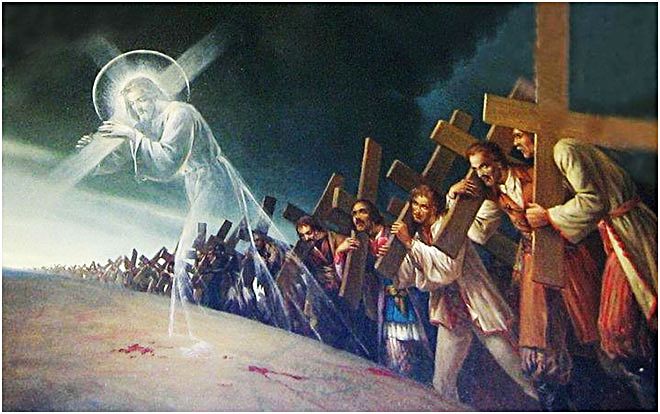
Yet Jesus is clear: “Whoever wishes to come after me must deny himself, take up his cross, and follow me” (Mk 8:34), and again, “Whoever does not carry his own cross and come after me cannot be my disciple” (Lk 14:27). Discipleship, therefore, is inseparable from the Cross. In the first reading, we hear the anguished cry of the prophet Jeremiah. The people refuse to listen to his warnings against their evil ways; instead, they seek to silence him by killing him. In his desperation, Jeremiah cries out to the Lord for mercy and protection. His suffering foreshadows the truth that the Cross always points beyond itself to future joy.


Like Jeremiah, and like the disciples, we often fail to understand what Jesus is trying to teach us and what He is truly offering us. It is not power or position that leads to the joy of the Kingdom, but a life of humble service, simplicity, and self-giving love. Only by embracing the Cross can we enter into the rich and lasting joy that Christ promises.


Response: Save me, O Lord, in your merciful love.


Copyright ©2025 ©Springs of Living Water  http://springs.carmelmedia.in

3rd MARCH 2026

70 Ideas for What to Give Up for Lent: 2026 Fasting Guide | Christianity.com


TUESDAY, SECOND WEEK OF LENT


Is 1: 10, 16-20            Ps 50: 8-9, 16-17, 21, 23                    Mt 23: 1-12


FROM RITUAL TO RENEWAL


Today’s scriptural passage reaches into the very heart of Lent, calling us to embrace a deep, life-changing conversion. In Isaiah, the prophet speaks to the people as if they were “Sodom” and “Gomorrah”; intending to wake them up from spiritual complacency. God is not interested in empty rituals or pious appearances; He desires a transformed heart. “Wash yourselves clean… cease to do evil, learn to do good.” Lent is to turn from the habits that darken our lives and to choose the light. Isaiah also offers a promise as bold as the call: “Though your sins are like scarlet, they shall become white as snow.” God never exposes our faults to shame us, but to heal us. Repentance is not condemnation, it is an opening, a clearing of the soul where grace can flow freely again. Like a parent who sees a child covered in mud, God does not reject us; He draws near with compassion, ready to wash and renew. In the Gospel, Jesus speaks of the scribes and Pharisees. They know the Law well, but the gap between their words and their deeds create chaos. They burden others but do nothing on their part. Jesus teaches us that true greatness in the Kingdom is not found in titles or honor, but in humility.


Together, these readings expose two dangers which Lent confronts: hypocrisy and empty religiosity. It asks us not to be Christians only in appearance, nor to treat faith as a ritual. Instead, we are called to integrity; where what we profess with our lips is lived in our lives. Think of a person who quietly serves; perhaps a parent caring for a sick child, or someone who forgives without demanding attention. These hidden acts reveal the heart of Christ more powerfully than public displays of piety. God is keen on the surrender our hearts live, than on the impression our hearts create. As we journey through Lent, may we allow God to wash us, reshape us, and lead us into deeper authenticity. Let us choose humility over pride, service over status, conversion over comfort. And may we discover that in surrendering ourselves, we find the true freedom and joy that God desires for us.


Response: To one whose way is blameless, I will show the salvation of God.


Copyright ©2026 ©Springs of Living Water  http://springs.carmelmedia.in

2nd MARCH 2026

Returning To The Lord | 3 Minutes of Truth


MONDAY, SECOND WEEK OF LENT


Dn 9: 4-10                  Ps 79: 8, 9, 11, 13                   Lk 6: 36-38


RETURN TO THE LORD WITH A MERCIFUL HEART


Lent is a sacred season of return, a journey inward to the truth of our hearts and forth to the tangible practice of kindness. The Word of God presented to us blends two essential aspects of Christian life: humble repentance before God and active mercy towards our neighbour. As God’s children, we are called to consider whether our Christian way of living genuinely yields the fruit of kindness. The first reading presents one of Scripture’s most powerful penitential prayers. Daniel stands before God without excuses, confessing shared guilt and embodying the Church’s teaching that sin has both personal and social dimensions (Reconciliatio et Paenitentia). He identifies with the people and accepts shared responsibility. Yet his confession is also filled with hope, proclaiming a faithful God whose mercy restores justice with love. As the Catechism teaches, no sin is beyond forgiveness. In the Gospel, Jesus reveals God’s very nature: mercy. Lived through forgiveness, generosity, and freedom from judgment, mercy shows how deeply God’s kindness has healed us. As Misericordiae Vultus affirms, mercy is the foundation of the Church’s life.


Carmelite spirituality insists that true contemplation leads to compassion. St. Teresa of Ávila warns that prayer without love of neighbour is an illusion, while St. John of the Cross teaches that we will be judged only on love. The stillness of Carmel is not an escape from the world, but a place where God purifies the heart of judgment, anger, and self-righteousness. Only an emptied heart can become a vessel of kindness. As Gaudium et Spes reminds us, the joys and sorrows of humanity are also those of Christ’s followers. Lent calls us to honest self-examination: to be humble before God, compassionate toward others, and purified in prayer. Jesus reminds us that the measure we give is the measure we receive. Lent is not only about renunciation, but about becoming like the Father. Daniel teaches us to return to God in humility; Jesus teaches us to live that reconciliation in mercy. May this Lent make us credible witnesses of the Father’s gracious love.


Response: O Lord, do not treat us according to our sins.


Copyright ©2026 ©Springs of Living Water  http://springs.carmelmedia.in
1st MARCH 2026

Transfiguration: Glory, Faith, and the Journey of Lent - Saint Rose of  Lima, Murfreesboro, TN


SUNDAY, SECOND SUNDAY OF LENT


Gn 12: 1-4        Ps 33: 4-5, 18-20, 22       2 Tm 1: 8-10        Mt 17: 1-9


THE JOURNEY OF TRANSFIGURATION


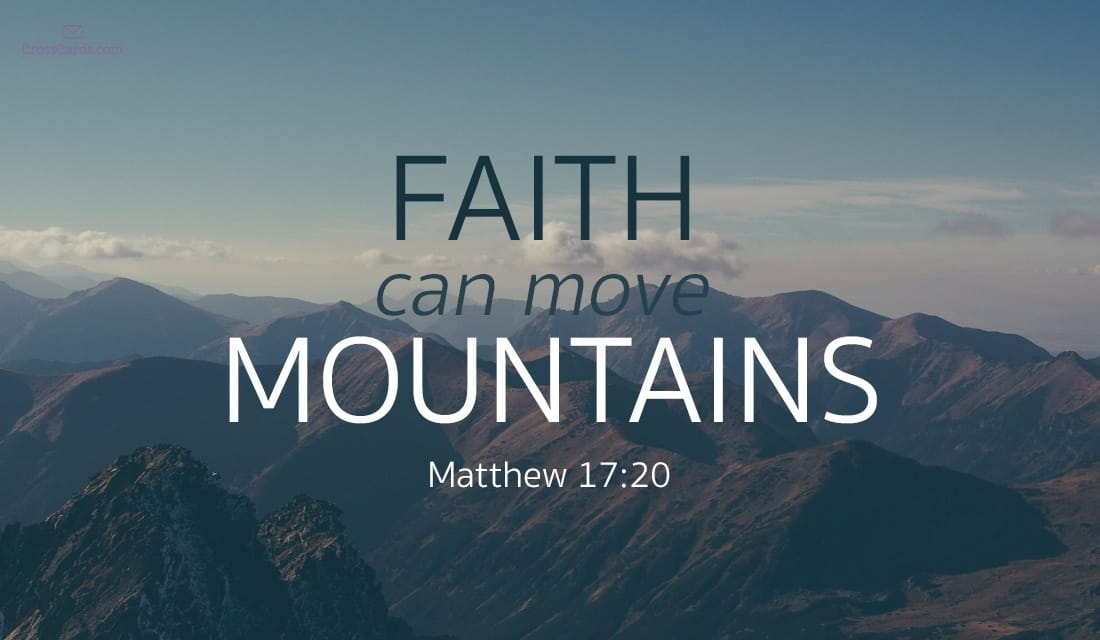
Lent is a season of journey. It begins in the desert with Jesus tempted, and it moves toward the mountain where He is transfigured. Each step is meant to deepen our faith, purify our hearts, and prepare us for the glory of Easter. Today’s readings trace this Lenten path, from the call to set out in faith, to the endurance of suffering, and finally to the revelation of divine glory.


In the first reading, we meet Abram at the threshold of a great adventure of faith. God says to him, “Go from your country and your kindred and your father’s house to the land that I will show you.” There are no maps, no guarantees, no explanations, but only a promise. Abram must leave behind the familiar and trust the unseen. His journey is not merely geographical; it is spiritual. It marks the beginning of salvation history—a movement from security to surrender, from human plans to divine providence. Every true believer must, at some point, hear that same call: “Go forth.” Leave behind what confines your faith. Step out of comfort and control. Lent, in this sense, is our own pilgrimage from certainty to trust, from possession to promise. God blesses those who walk in faith, not because the road is easy, but because the destination is divine.


St. Paul, writing to Timothy, gives us the next stage of this journey. He urges him, “Bear your share of hardship for the Gospel, with the strength that comes from God.” Like Abraham, Timothy is called to courage, not comfort. Faith will always involve risk. But Paul reminds us that grace has already gone before us: “Christ Jesus abolished death and brought life and immortality to light through the Gospel.” The Transfiguration that dazzled Peter, James, and John is already a hidden reality in every believer—we live in the light of a glory that suffering cannot destroy. Lent, therefore, is not about earning God’s favor through hardship; it is about uncovering the grace that already sustains us through the cross.


The Gospel brings these themes together in the luminous mystery of the Transfiguration. Jesus takes Peter, James, and John up a high mountain. There, before their eyes, His face shines like the sun and His clothes become dazzling white. Moses and Elijah who stand as symbols of the Law and the Prophets appear, speaking with Him about His coming passion. It is a breathtaking moment, and Peter, overwhelmed, wants to stay there forever: “Lord, it is good for us to be here.” But the voice from the cloud redirects their gaze: “This is my beloved Son… listen to Him.” The Transfiguration is not a call to remain in ecstasy; it is a preparation for fidelity. The glory of the mountain will soon give way to the agony of Gethsemane. Jesus allows His disciples to glimpse His divinity so that when they see His humanity bruised and broken, they will not lose hope.


Lent invites us to climb that same mountain, not for escape, but for perspective. There, we see who Jesus truly is: the Son in whom the Father is well pleased, and who we are called to become. But we cannot stay on the mountain. We must descend into the valley of daily life, carrying within us the memory of the vision. The light we have seen is meant to guide us through darkness.


Notice the tenderness of Jesus’ gesture at the end of the scene. The disciples fall to the ground in fear when the divine voice speaks, but Jesus comes to them, touches them, and says, “Rise, and do not be afraid.” These words are the heart of the Gospel today. Faith is not freedom from fear; it is the courage to rise again because Jesus is near. “Rise, and do not be afraid.” That is God’s word to every pilgrim soul this Lent. When the journey feels uncertain like Abraham’s, when the cost of discipleship feels heavy like Timothy’s, when the cross looms large before us, remember this moment on the mountain. The glory revealed there is not a passing vision; it is the destiny prepared for all who follow Christ. The Transfiguration is not just about Jesus, it is about us, transformed by grace into His likeness. As we continue through Lent, let us allow the Lord to lead us up the mountain of prayer, to strengthen our faith, and then to lead us back down into the world with renewed courage.


Response: May your merciful love be upon us, as we hope in you, O Lord.


Copyright ©2026 ©Springs of Living Water  http://springs.carmelmedia.in
28th FEBRUARY 2026

REFLECTION/HOMILY FOR TUESDAY OF THE ELEVENTH WEEK IN ORDINARY TIME, YEAR  II - Fr. Chinaka's Media


SATURDAY, FIRST WEEK OF LENT


Dt 26: 16-19               Ps 119: 1-2, 4-5, 7-8               Mt 5: 43-48


CALLED TO LOVE BEYOND LIMITS


The readings today invite us to take a serious look at what it truly means to belong to God not just by name, but by the way we live and love. In the first reading, Moses reminds the people of Israel about the covenant they have entered into with the Lord. God calls them to walk in His ways, to keep His commandments and to be a people set apart, not because they are better than others, but because they are chosen to reflect God’s holiness in the world. God promises that if they live faithfully, He will raise them high in praise and honour. This is not about privilege, but about purpose. To be God’s people means to mirror His goodness and mercy in our daily lives.


In the Gospel Jesus reveals the fullness of what that covenant looks like: love that knows no boundaries. Jesus says, “Love your enemies, and pray for those who persecute you.” These words strike the heart because they go against our natural instincts. We find it easy to love those who are kind to us, to forgive those who apologize, to pray for those who treat us well. But Jesus calls us to something greater to love as the Father loves. God’s love is not selective. He makes His sun rise on the good and the bad alike. His love is not based on merit, but on mercy. When we love those who hurt us, when we forgive those who do not deserve it, when we choose peace instead of revenge, we step into the very heart of God. This is the meaning of ‘being perfect as your heavenly Father is perfect,’ not flawless, but complete in love.

Lent is the perfect time to let this Word take root in us. It is a time to let go of grudges, bitterness, and the walls that separate us from others. God asks not for great acts of sacrifice, but for hearts willing to love as He loves. Let us pray for the grace to love the difficult ones, to bless those who oppose us, and to become true children of our heavenly Father.


Response: Blessed are those who walk in the law of the Lord!


Copyright ©2026 ©Springs of Living Water  http://springs.carmelmedia.in
27th FEBRUARY 2026

Matthew 5:20-26 Reflection: Reconciliation


FRIDAY, FRIDAY AFTER ASH WEDNESDAY


Ez 18: 21-28               Ps 130: 1-8                 Mt 5: 20-26


A NEW CHANCE WITH GOD


Sometimes in life, we feel heavy inside. We feel we made mistakes, hurt others, or walked far away from God. On such days, we think, “Will God still accept me? Can I start again?” Today’s readings give us a beautiful answer: Yes. God always invites us to begin again. These readings take us from sadness to hope, from darkness to light, and from fear to peace.


In Ezekiel 18, the people of Israel were discouraged. They believed their sins had destroyed their future, and that God would reject them forever. But God speaks with kindness. He tells them that if a sinner turns away from evil and chooses good, that person will live. He does not enjoy punishing His people. What He truly wants is for every person to turn back, change their life, and come close to Him again. God’s message is very simple: “Turn back to Me, and you will live”. This shows that God’s mercy is greater than our past. The psalmist responds to God with an honest prayer. He says, “Out of the depths I cry to You, O Lord”. This means he is praying from a place of pain, guilt, or sadness. But even in his low moment, he trusts that God will hear him. He says, “With You is forgiveness”. He waits for God with hope. The psalm teaches us that when we cry to God, He listens. When we feel lost, we can trust His mercy.


Jesus shows how God answers the prayer of a person who wants to return to Him. He wants a clean and loving heart. He calls us to forgive, make peace, and love one another. If we want to be close to Him, we must also be close to others in love. These readings call us to take an important step: turn back to God. No matter how far we have gone, God waits for us with open arms. We can cry from our depths and trust His mercy. We must, forgive others, and keep a peaceful heart. When we do this, God gives us a fresh start, new hope, and true peace during this Lenten season.


Response: If you, O Lord, should mark iniquities, Lord, who could stand?


Copyright ©2026 ©Springs of Living Water  http://springs.carmelmedia.in

6th MARCH 2026

Psalm 105:5 Remember the wonders He has done, His marvels, and the  judgments He has pronounced,


FRIDAY, SECOND WEEK OF LENT


Gn 37:3-4,12-13,17-28                      Ps 105:16-21              Mt 21:33-43,45-46


REMEMBERING GOD’S WONDERS


In the holy season of Lent, we are invited, to journey inward and surrender all the evil desires that cling to our hearts. It is a time of purification, a desert experience where we are called to strip away selfishness, envy, and pride, so that the Spirit may breathe new life within us. This beautiful season of Lent is not merely about external practices of fasting or abstinence, but about the deeper conversion of the heart—a turning away from sin and a turning toward the Lord who alone satisfies.


We are reminded of the brothers of Joseph, who allowed jealousy and resentment to poison their hearts, selling their own brother into slavery. Likewise, the tenants of the vineyard hardened themselves against the master, choosing violence and greed over gratitude and stewardship. Today’s readings warn us of what happens when evil desires are allowed to take root: they blind us to God’s presence and estrange us from His love. These readings remind us that when we allow envy and bitterness to rule, we risk becoming blind to God’s larger plan.


Yet the psalmist offers us another path. He “remembers the wonders the Lord has done”, and in that remembrance finds strength to trust, to hope, and to rejoice. Lent calls us to this same remembrance: to recall the countless mercies of God in our lives, the times He has rescued us, forgiven us, and drawn us close. Gratitude cleanses the heart, for it shifts our gaze from ourselves to the One who is faithful. As disciples of Christ, we walk in silence and prayer, seeking union with God in the hidden depths of our souls. This season is an invitation to let go of all that weighs us down, to surrender our desires at the foot of the Cross, and to allow Christ to transform us. In giving away the darkness within, we make room for His light. In renouncing evil desires, we discover the freedom of love. May this Lent be a time of renewal, where our hearts become dwelling places for the Lord and we live as witnesses of His mercy and joy.


Response: Remember the wonders the Lord has done.


Copyright ©2025 ©Springs of Living Water  http://springs.carmelmedia.in

20th FEBRUARY 2026

Crown of thorns and cross glowing with purple background symbolizing jesus  christ's sacrifice Stock Photo | Adobe Stock


FRIDAY, FRIDAY AFTER ASH WEDNESDAY


Is 58: 1-9                    Ps 51: 3-6, 18-19                    Mt 9: 14-15


LENT: NOT A PERFORMANCE, BUT A CONVERSION


The season of Lent is a time set apart to rediscover what truly matters, to realign our lives with God, and to reawaken our hearts to the needs of others. We often begin this journey with enthusiasm, choosing to give up a favourite food, a habit, a distraction. Lent can easily become a spiritual performance while overlooking the deeper call to conversion. But today’s reading from Isaiah reminds us that it is not about what we let go of externally, but how we allow God to transform internally. Prophet Isaiah exposes the emptiness of ritual practices of the people. Despite their commitment to prayer and fasting, the people’s hearts remained hard. They remained in their self-centred behaviour, mistreated others. In this situation God reveals that fasting without love, without mercy, without change has no place in true worship.


In the Gospel when Jesus is asked about fasting, He shifts the focus from the act, to the relationship behind it. He reminds us that fasting is not merely about deprivation, but about preparing place within us for God. It is not an obligation but an invitation to make room for grace and holiness. Isaiah reminds us that true fasting must go beyond self-discipline. It should change how we see and how we live. It should open our eyes to the wounds of the world and awaken in us a desire to respond not just with words, but with compassion, justice, and mercy. This is the fast that pleases the Lord, not just the absence of food, but the presence of love. It’s not merely about self-denial, but about self-giving.


This Lenten season, perhaps the more difficult question is not ‘What will I give up?’ but ‘What will I give away?’ Will I give my time to someone who feels forgotten? Will I give forgiveness where I have held resentment? Will I give peace in place of conflict, or silence in place of gossip? True fasting is not performative rather it is transformative. It may begin in quiet prayer and sacrifice, but it must lead us to action. It should change not only what we do, but who we are becoming.


Response: A broken and humbled heart, O God, you will not spurn.


Copyright ©2025 ©Springs of Living Water  http://springs.carmelmedia.in

9th FEBRUARY 2026

Luke 9: 22-25 (2020) | CHRISTIAN ART | Gospel Reading & Art Reflection


THURSDAY, THURSDAY AFTER ASH WEDNESDAY


Dt 30: 15-20               Ps 1: 1-4, 6                 Lk 9: 22-25


CHOOSING THE WAY OF CHRIST


To be human is to be weak, vulnerable. Even when we do not merit salvation, God takes the initiative to restore our broken relationship with Him and heals our lost communion with one another. Today’s liturgy presents this invitation clearly: we can either continue on a path of destruction or undergo a change of heart. Accepting this invitation calls us to obedience. To be a Christian is a gift and an invitation that can be either accepted or rejected. Choosing Christ and following Him demands letting go—to freely renounce people, possessions and even aspects of our identity. It is a journey of moving beyond biological and social securities toward a deeper spiritual belonging that transcends physical and geographical boundaries. Since Jesus Himself suffered and was rejected, His followers must be ready to accept rejection as part of their communion with Him.


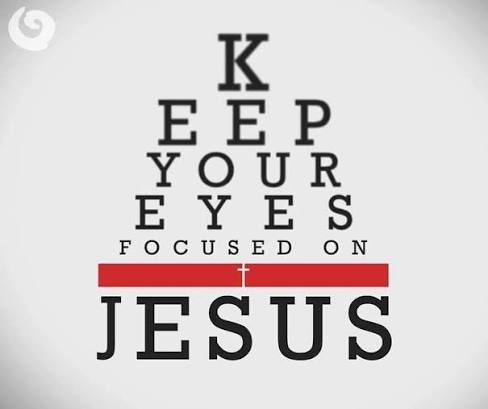
When we are led by our senses, we become distracted, disoriented and lost. Paradoxically, losing oneself is the path to true life—a shift from a self-centered existence to one that embraces all humanity. Lent invites us to practice entering through the narrow door, a choice to live beyond mere sight and move from the dominance of the senses to the reality of faith. This journey requires discipline, grace, and a life rooted in Jesus. Fixing our gaze on Christ means obeying His words, learning to love what He loved, and enduring the demanding process of becoming more like the Master. In this way, Jesus is revealed as the Way, the means, and the single point of entry into God’s Kingdom through His merciful and self-giving love.


Christian spirituality is not mere personal piety, nor is discipleship a program—it is a way of life. Through fasting, prayer, and almsgiving, we are led beyond self-centeredness toward genuine love and service. Faith draws us out of ourselves to follow Jesus by learning, praying and serving. This journey is not about acquiring information but about gradual inner transformation. Ultimately, the true joy of discipleship lies not in the success of our service, but in being called into communion with God and chosen as coheirs of the eternal Kingdom.


Response: Blessed the man who has placed his trust in the Lord.


Copyright ©2026 ©Springs of Living Water  http://springs.carmelmedia.in